
In this article:
What is a certified ARR reforestation project?
The 5 development phases
Fazenda Boa Vista
What to check before buying credits
Credit quality and project quality
FAQ
Support climate projects of high environmental value
A certified reforestation project is an ARR (Afforestation, Reforestation and Revegetation) project that quantifies CO₂ removals using a recognised methodology and submits them to independent validation and verification – for example under Verra's Verified Carbon Standard (VCS). Only once verified can these removals generate certified carbon credits.
Planting trees is relatively simple. Proving that those trees deliver a measurable, additional and lasting climate impact is far more complex – and the work begins well before the first tree goes into the ground.
What is a certified ARR reforestation project?
An ARR project restores forest cover on degraded or non-forested land. To be certified, it must demonstrate three things: that the CO₂ removals are attributable to the project's activities, that they are quantified using a recognised methodology, and that the risks of carbon loss are managed over the long term.
The project developer's job is to turn an ecological restoration effort into a structured climate project that can be monitored and independently audited.
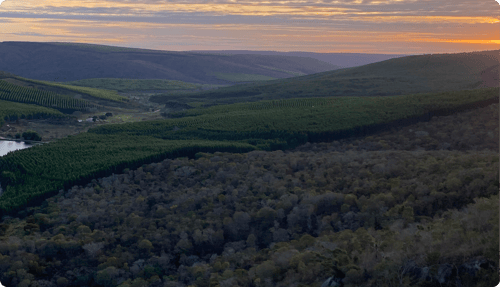
ARR and REDD+: what's the difference?
The two project types are often confused, but they deliver different outcomes.
| ARR | REDD+ | |
| Where it operates | Degraded or non-forested land | Existing forests at risk |
| What it generates | CO₂ removals from the atmosphere | Avoided emissions |
| Key question | Would the reforestation have happened anyway? | How much deforestation would have occurred without the project? |
| How the impact grows | Through biomass growth over time | Through reduced forest loss |
| Example | Fazenda Boa Vista, Brasile | Selva de Urundel, Argentina |
The 5 development phases of a certified reforestation project
1. Site assessment and feasibility study
The first question is whether the land is suitable for an ARR project. This calls for an assessment of the soil, existing vegetation, historical land use, land tenure, and the main natural and human-induced risks.
You also need to understand what caused the land to degrade and how it would evolve without intervention. This is where much of a project's quality is decided – not at the end, when the credits are issued.
2. Baseline and additionality: proving the removals are real
To quantify removals, you compare what happens with the project against what would have happened without it. This reference scenario is the baseline.
The project must then demonstrate its additionality: the reforestation must not simply continue an activity that was already planned or economically inevitable. If the trees would have grown anyway, the climate benefit cannot be attributed to the project. A credit only represents a climate benefit if that removal would not have occurred in any case
3. Forest design and carbon measurement (MRV)
Species selection, soil preparation, planting density and management cycles must all suit local ecological conditions. A high-quality ARR project does not maximise the number of trees: it builds a forest system that can grow, protect the soil and withstand the risks of the landscape.
Forest inventories, sample plots, biomass data and geospatial tools are used to quantify the carbon removed. This is the Measurement, Reporting and Verification (MRV) system: it turns estimates into documented results that independent parties can review and replicate.
4. Permanence, reversal and leakage: protecting the impact over time
Carbon stored in biomass can be released back into the atmosphere. Fires, drought, disease or changes in management can cause a reversal - the loss of carbon that has already been sequestered.
That is why permanence is designed in from the outset, through forest management, prevention and continuous monitoring. Under the VCS, forestry projects assess their own non-permanence risk and set aside a share of their credits in a pooled buffer account, which covers any losses.
Leakage must also be assessed: if grazing or farming on the site simply moves elsewhere, part of the climate benefit is lost.
5. Validation and verification: certifying a project under Verra's VCS
All of the technical work comes together in the Project Description: activities, applied methodology, baseline, additionality, quantification of removals, risks and monitoring plan.
The developer does not certify its own work. An independent Validation/Verification Body (VVB) validates the project, checking that it complies with the standard and the methodology. It then verifies the results achieved in each monitoring period. Only verified removals lead to the issuance of certified carbon credits in the standard's registry.
The cycle then repeats: the trees grow, the carbon is monitored, and each new period undergoes a new verification.
Fazenda Boa Vista: a certified reforestation project in Brazil
Fazenda Boa Vista, developed by our partner Carbon Credits Consulting in Brazil, is a concrete example of how reforestation can turn degraded land into a certified climate project – and of how these phases are applied on the ground.
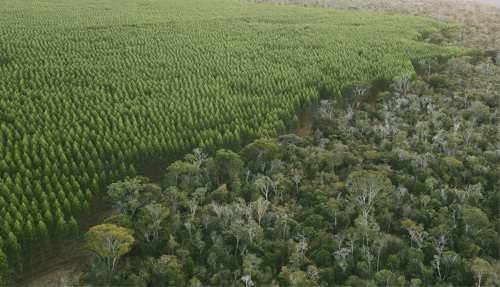
Located in the transition zone between the Cerrado and the Atlantic Forest, the project works on land damaged by farming and livestock grazing, which had caused erosion, loss of soil fertility and habitat fragmentation. This fragmentation hinders the movement of local wildlife, such as the jaguar, and weakens the ecological connections between the different biomes.
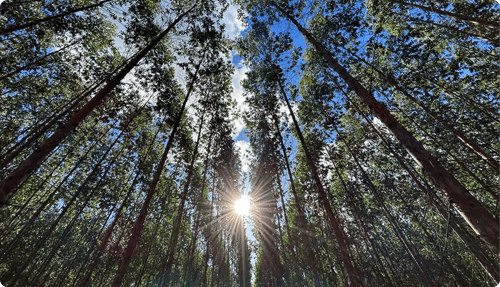
To restore the land, 307,776 trees were planted across 293 hectares of degraded land, using a model that combines reforestation, sustainable forest management and natural regeneration. The area also includes 297 hectares of native forest, helping to create a more connected landscape that supports biodiversity.
Having completed the validation and verification processes required by Verra's Verified Carbon Standard (VCS), Fazenda Boa Vista has generated more than 23,000 carbon credits from certified removals, turning its reforestation activities into measurable, verified climate outcomes.
Beyond carbon, the project contributes to the recovery of the soil and natural habitats, combining its environmental work with training and health and safety activities for workers.
Certified carbon credits from reforestation: what to check before you buy
If you are buying credits from ARR projects, certification is the starting point, not the final guarantee. These are the minimum checks to ask your supplier for.
- Standard and registry: does the project have a public ID on the standard's registry (e.g. Verra)? Have the credits been issued, or is the project still under validation?
- Methodology: which ARR methodology is applied, and which version?
- Verification period: which monitoring period do the credits you are buying relate to?
- Additionality and baseline: how were they demonstrated in the Project Description?
- Permanence: what non-permanence risk was assessed, and how many credits are held in the buffer pool?
- Leakage: how were the activities that took place on the site before the project dealt with?
- Co-benefits: are the biodiversity and community benefits documented and verified, or merely claimed?
Credit quality and project quality
A quality credit stats long before it is issued. Standards are essential, but they are no substitute for rigorous project design. Baseline, additionality, measurement, risk management and monitoring must be built in from the earliest stages.
This is the project developer's role: to turn degraded land into a climate outcome that is measurable, verifiable and built to last.
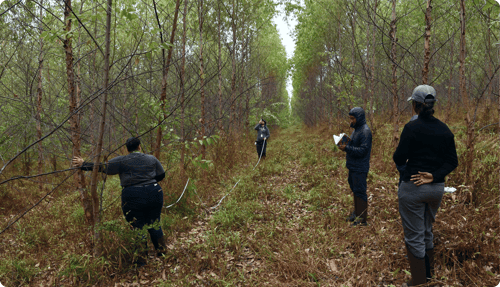
At GFP, we develop nature-based projects on one principle: the quality of a credit depends, first and foremost, on the quality of the project behind it.
Frequently asked questions about certified reforestation projects
What is a certified reforestation project?
It is an ARR project that restores forest on degraded land and quantifies CO₂ removals using a recognised methodology. The removals are validated and verified by an independent body under a standard such as Verra's VCS. Only verified removals generate certified carbon credits.
Who certifies carbon credits?
The standard - Verra, for example - sets the rules and runs the registry in which credits are issued. Project validation and results verification are carried out by an independent, accredited Validation/Verification Body (VVB). The developer prepares the documentation but does not certify its own work.
What is the difference between an ARR project and a REDD+ project?
An ARR project plants or regenerates forest on land without tree cover and generates CO₂ removals. A REDD+ project protects an existing forest threatened by deforestation or degradation and generates avoided emissions. The baseline, the risks and the measurement approach all differ.
When does a reforestation project generate credits?
Only after a monitoring period has been verified. The trees first need to grow and build up measurable biomass; the VVB then verifies the removals and the standard issues the credits on its registry. The process is repeated for each subsequent monitoring period.
What happens if a project's forest burns?
A fire can cause a reversal, releasing carbon that has already been sequestered. Under the VCS, forestry projects set aside a share of their credits in a pooled buffer account: if a loss occurs, buffer credits are cancelled to cover it. Prevention and monitoring reduce this risk.
Does buying reforestation credits neutralise a company's emissions?
No. Buying carbon credits is not the same as neutralising your own emissions. Credits support climate projects, but they are no substitute for cutting emissions. Under Directive (EU) 2024/825, claiming that a product has a neutral, reduced or positive impact on the climate on the basis of carbon credits is prohibited across the EU.
Support climate projects of high environmental value
Behind every carbon credit lies a process of development, measurement and verification. With Green Future Project Group, you can support certified climate projects, from reforestation to ecosystem conservation.
We guide you through every step, helping you identify and select the projects best suited to your company's needs and goals, right through to the purchase of carbon credits.